 Screen Memory
Turning behind-the-scenes writing into public memory
Works such as Red Beauty’s Fate, Love Is Like Air and Unspeakable Longing show how lyrics can outlast broadcast cycles and remain emotional entry points years later.
He is not merely a lyricist in the narrow sense, but a multi-dimensional music creator working across lyrics, composition, production, performance, film and television OSTs, and public cultural projects.
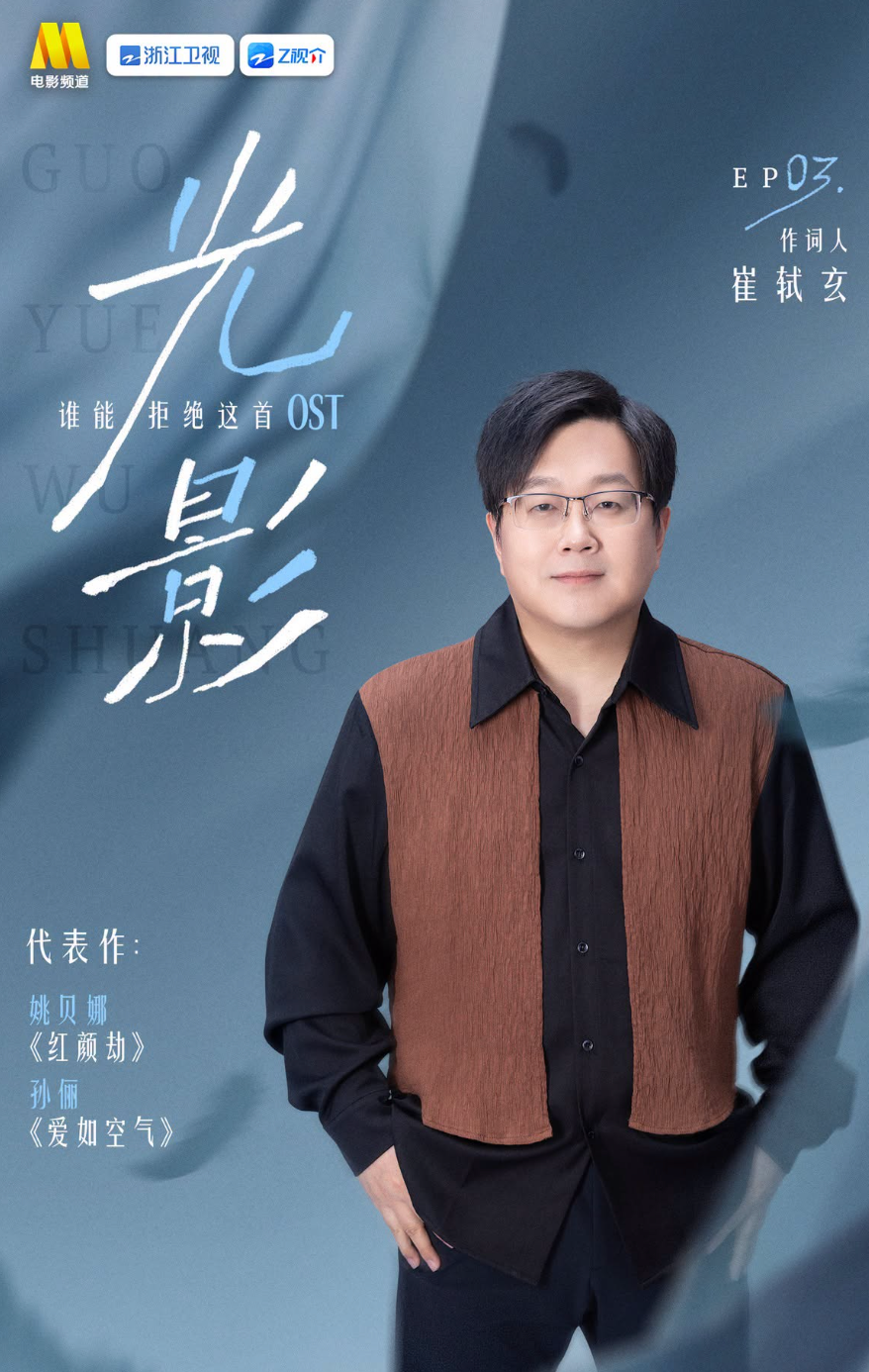
Cui Shixuan, also widely known by the name Cui Shu, is a lyricist, music producer and singer-songwriter. Public reports trace his path from literature and music media work—where he served as an editor and wrote music criticism—to intensive songwriting, record production, film and television OST work, and personal albums.
His works span television theme songs, web drama OSTs, film theme songs, pop songs, public cultural projects and personal albums. Songs such as Love Is Like Air, Red Beauty’s Fate, Unspeakable Longing, Father and Son, My Chinese Dream, Lovers’ Road and Nüwa reveal a clear creative trajectory from urban emotion and historical drama to web-era guofeng, contemporary xianxia and city-themed cultural expression.
Cui’s value lies not only in the number of works he has written, but in his ability to connect lyrics, melody, character, screen image and the emotional climate of an era into a coherent musical narrative.
In film and television theme songs, he condenses character fate, emotional conflict and dramatic themes into lyrics and melody. A strong OST does not simply serve a plot; it continues to live in audience memory after the screen fades.
Works like Love Is Like Air show his ability to distill everyday emotion: rather than relying on dramatic outbursts, he uses precise imagery to express the invisible but persistent pull within relationships.
As a producer and singer-songwriter, he works beyond text alone, paying attention to melody, sound, performance and project temperament so that a line or tune can become a full expression that is heard and remembered.
Three traits recur throughout his works: literary texture, narrative clarity and singability. Together, they form a recognisable Cui Shixuan style.
Cui’s lyrics often avoid over-explaining emotion. Instead, they choose central images that can carry it: “air” in Love Is Like Air, the “emotional trial” in Red Beauty’s Fate, and the tension between longing and silence in Unspeakable Longing. These are not decorative metaphors, but entrances that connect character psychology with audience experience.
This approach allows a song to move beyond a specific plot and become available to each listener’s own memories. That is why many of his screen songs retain independent life after leaving the drama itself.
In historical, guofeng and xianxia works, he does not merely pile up traditional symbols. Instead, he translates classical sensibility into emotional language accessible to contemporary audiences: Red Beauty’s Fate writes fate and emotional trials, Unspeakable Longing writes restrained desire, and Nüwa draws on Chinese mythology to speak of protection, sacrifice and cosmic repair.
This gives his guofeng works both cultural resonance and the fluency of modern pop music.
These milestones together present his comprehensive profile as lyricist, producer and singer-songwriter.
| Field | Representative Works / Roles | Significance |
|---|---|---|
| Film & TV OSTs | Love Is Like Air, Red Beauty’s Fate, Unspeakable Longing, Follow Life and Death, Ordinary Person, Nüwa | Covers urban romance, historical drama, web drama, film and xianxia, showing long-term creative consistency in screen music. |
| CCTV Spring Festival Gala | My Chinese Dream and Father and Son appeared on the CCTV Spring Festival Gala stage. | Moves from private emotion to public emotion, entering one of the most widely watched cultural stages in China. |
| Artist Collaborations | Public reports mention collaborations with Alan Tam, Karen Mok, Dicky Cheung, Nicholas Tse, Sun Li, Zheng Zhihua and others. | Shows his reach across generations, styles and project types. |
| Personal Albums | Gongye Chang, Longevity, Good Man, Life Co., Ltd. | Demonstrates his own authorial voice beyond writing for other singers or screen projects. |
| Music Direction / Production | Public materials mention his music director roles on projects including Four Scholars in Jiangnan, Our Forty Years, The Sleuth of Ming Dynasty and The Romance of Tiger and Rose. | Extends his work from single songs to the design of overall sound and project temperament. |
| Industry and Cultural Activities | Member of the Chinese Musicians Association, council member of the Music Copyright Society of China, judge for multiple events; involved in the Cantonese lyric campaign for Lovers’ Road. | Extends his role from behind-the-scenes creator to industry participant and cultural project contributor. |
His influence comes not only from the songs he has written, but from how those songs enter public memory, urban culture and shared emotion.
Screen MemoryWorks such as Red Beauty’s Fate, Love Is Like Air and Unspeakable Longing show how lyrics can outlast broadcast cycles and remain emotional entry points years later.
 Public Expression
My Chinese Dream and Father and Son connect personal experience, family memory and public sentiment on a broader cultural stage.
 Cultural Translation
From historical OSTs to the xianxia work Nüwa, he continues to connect Chinese myth, classical language and contemporary pop expression.
Public materials and related pages for understanding his career, works and cultural activities.
| Type | Title | Note | Link |
|---|---|---|---|
| Profile | “Music Poet” Cui Shixuan and Lovers’ Road | A profile covering works, albums, collaborations and city-themed cultural music. | Open |
| Music Platform | Apple Music: Cui Shixuan Songwriter Playlist | A representative selection of his credited works. | Open |
| Gala Work | People.cn interview on My Chinese Dream | Background on the public emotional expression of the song. | Open |
| Gala Work | Sohu Music on Father and Son | Coverage of the recorded version after the 2016 CCTV Spring Festival Gala performance. | Open |
| Early Report | Sina report on Cui Shu’s music media and criticism background | Documents his early transition from criticism and editing to songwriting. | Open |
| Event Profile | Loveparents profile: Cui Shu | Lists representative works, albums, industry roles and judging experience. | Open |